While the first ever example dates back to 1839, they’ve become so commonplace in recent years, they’ve earned a place in the Oxford Dictionary and have actually spawned equipment to better enabling taking them.
Your grandparents probably even know what a selfie is. Maybe they’ve even been in one themselves – such is their reach.
There’s two camps when it comes to selfies.
On the one side there are the traditionalists who still actually ask other people to take photos of them on holiday.
Then there are the super-fans – and we ALL know one – who know exactly which filter and which angle captures them at their best and fill up your feed with their self-portraits,
Unfortunately, there’s some very bad news for them – and it’s been backed up by scientific research.
Could this be the death toll for selfies? We doubt it
According to a study published in Social Psychological and Personality Science , lovers of taking a selfie are not only seen as narcissistic – but they apparently also have a distorted view of their own attractiveness.
The death toll for selfies?
The research looked at the perceptions of both selfie and non-selfie takers.
Working on the basis that “people often perceive themselves as more attractive and likable than others do,” it examined people’s “self-favouring biases”.
Instagram and Facebook are full of people snapping their lives Getty
The perceptions of images of both selfie-takers and non-selfie-takers were analysed and then compared against the perceptions of other, external people.
But if you loathe a selfie, don’t get too smug just yet
Both camps were found to have equal levels of narcissism.
But as the study goes on to say, “we found selfie-takers perceived themselves as more attractive and likable in their selfies than in others’ photos, but that non-selfie-takers viewed both photos similarly.”
Put the phone down and step away Getty
And in a final blow, external judges rated the selfie-takers as being less attractive, likeable and more narcissistic.
However, while this is genuinely interesting and insightful, we suspect it’ll take a lot more to stop the selfie juggernaut.
Zoe Eastman, 33, took three bubble baths a day to satisfy her unusual craving while pregnant with son Indie
A mum-to-be who became addicted to eating BUBBLES during her pregnancy claims eating suds was better than sex.
Zoe Eastman insisted on soaking in the tub three times a day to satisfy her unusual craving , spending hours consuming every last bubble.
The 33-year-old barber, from Liverpool, said: “When I first fell pregnant, I enjoyed pampering myself in the bath with soothing lotions.
“I’d try different products, but it wasn’t until I was 20 weeks pregnant that the craving to eat bath bubbles started.
She started to crave soapy suds at 20 weeks Photo: HotSpot Media
“I came across Radox Muscle Therapy, and I couldn’t get enough.
“I would put the bubbles up to my nose and inhale.
“The experience was invigorating and soon I started tasting the bubbles. For some strange reason I loved the consistency.
“It was a sensual feeling – like having an orgasm. It was better than sex.”
The mum-of-one would cover her face in bubbles, and inhale the fragrant foam into her mouth.
The mum-to-be covered her face and inhaled the bubbles Photo: HotSpot Media
Getting through two bottles of Radox bubble bath a week, Zoe tried to hide her secret addiction from fiance, Mark Smith, 34, a builder, but one evening he caught her with a face full of bubbles in the bath.
She says: “When Mark caught me eating the bubbles, I should have felt embarrassed, but eating them was so exhilarating that I didn’t care what I looked like.
“Soon I was thinking about bath bubbles all day long.”
Zoe took three baths a day to satisfy her cravings Photo: HotSpot Media
When Zoe mentioned her strange craving to her other pregnant friends, they suggested she speak to her doctor, to find out if she was suffering from PICA – an eating disorder that is related to an iron deficiency in the body.
So, at five months pregnant, she visited the doctor and they took blood tests.
The results showed her iron levels were in fact normal.
Thankfully the doctor assured Zoe that her unusual pregnancy craving wasn’t harmful to her unborn baby.
HotSpot Media
Luckily, Zoe’s bizarre addiction didn’t harm her baby
Back at home, she continued to indulge in bubble baths, but it was only one scent that satisfied her craving – Radox Muscle Therapy, ginseng and black pepper.
Any others left her foaming at the mouth.
She says: “One day Asda sent a substitute bottle of bubble bath, I was fuming. No other brand did it for me.
“After that I stock piled to make sure I wouldn’t run out.”
Zoe’s addiction continued right up until she gave birth to son, Indie, who has just turned two.
HotSpot Media
Zoe with son Indie, now aged 2
A month later she had another taste of bath bubbles, but to her surprise the sensation left a nasty taste in her mouth.
Zoe says: “After Indie was born, the craving stopped straight away and when I tasted the bubbles it was horrible. The taste was disgusting – I nearly vomited.
“I wanted to see if I still liked it, but it tasted like soap.
“It’s probably a good thing the craving has gone now, as these days having a toddler leaves me with no time to soak in the tub – I’m lucky if I get five minutes in the shower.”
President Jacob Zuma could face 783 charges relating to a 1999 arms deal
South Africa’s prosecution says it will appeal against a court ruling that it should reconsider corruption charges against President Jacob Zuma.
Originally, the 783 charges were dropped weeks before the 2009 election which led to him becoming president.
But last month, a high court judge described that decision as “irrational”.
Mr Zuma has always denied the allegations which are linked to a 1999 arms deal worth billions of dollars.
And in April, a judge-led commission of inquiry found no evidence of corruption or fraud by any government officials at the time the deal was made.
After a case brought by the opposition Democratic Alliance (DA), Judge Aubrey Ledwaba said last month that the National Prosecuting Authority (NPA) should consider re-opening the case.
Director of Public Prosecutions Shaun Abrahams said he did his job “without fear, favour or prejudice” Photo: AFP
But National Director of Public Prosecutions Shaun Abrahams said that prosecutors should be able to exercise discretion over whether an investigation should continue.
Briefing journalists, Mr Abrahams said that this was an issue that affected the separation of powers and that the ruling “has far-reaching ramifications”.
He said he would be seeking leave to appeal to the Supreme Court against the High Court ruling .
Quoting legislation that defines the role of the NPA, Mr Abrahams said that he did his job “without fear, favour or prejudice”, adding that no-one influenced his decisions.
This decision means that President Jacob Zuma is off the hook, for now.
By appealing against last month’s High Court ruling, the NPA has refused to reinstate the charges.
Although chief prosecutor Shaun Abrahams was at pains to explain his independence, the opposition still maintains that he is too close to President Zuma.
If the Supreme Court of Appeal rules against the NPA, Mr Abrahams would have to go to the highest court in the land, the Constitutional Court.
So the allegations of corruption against the 73-year-old president are still going to be in our daily diet for some time to come.
But the president must be breathing a bit easier now.
The DA asked the courts to review the 2009 decision after it got access to the evidence in the so-called “spy tapes” that led the chief prosecutor Mokotedi Mpshe to drop the case.
In 2009, Mr Mpshe said that the tapes – recordings of phone conversations between officials discussing the timing of the case against Mr Zuma – suggested that there was political interference in the investigation.
Last month, Judge Ledwaba said Mr Mpshe had “found himself under pressure” when he decided to discontinue the prosecution and “consequently made an irrational decision”.
“Considering the situation in which he found himself, Mr Mpshe ignored the importance of the oath of office which commanded him to act independently and without fear and favour.
“Mr Zuma should face the charges as outlined in the indictment,” the judge said.
The investigation into Mr Zuma’s alleged corruption had become heavily politicised, amid a power struggle between Mr Zuma and then-President Thabo Mbeki.
Mr Zuma was sacked as deputy president in 2005 shortly after his financial adviser, Schabir Shaik, was found guilty of corruption and fraud in relation to the arms deal.
Controversial arms deal: What you need to know
Image copyrightAFP
1999: largest-ever post-apartheid arms deal announced with contracts totalling 30bn rand ($5bn; £2.5bn) to modernise national defence force
Deal involved companies from Germany, Italy, Sweden, the UK, France and South Africa
Allegations of bribery over deal dogged governments of President Jacob Zuma and predecessor Thabo Mbeki
Mr Zuma’s former financial adviser Schabir Shaik convicted in 2005 for corruption over deal. Found guilty of trying to solicit bribe from Thint, local subsidiary of French arms firm Thales, on behalf of Mr Zuma – then deputy president. Released on parole on health grounds after serving just over two years
Another official, Tony Yengeni, chairman of parliament’s defence committee at time of deal and ANC chief whip, convicted of fraud in 2003. Also freed on parole after serving five months of four-year sentence
April 2016: commission of inquiry into deal found no further evidence of corruption or fraud.
Ghana must overturn a 1-2 first leg deficit to reach the next stage of qualifying for the 2017 Africa Youth Championship after they were beaten in Addis Ababa by Ethiopia.
Didi Dramani’s side conceded goals inside the first ten minutes before Jonathan Osabutey’s second half consolation which now gives the Black Satellites significant hope that they can reach the next stage.
Dramani claims his side had suffered in the early stages because of high altitude and expects them to be fully in control when they host the Ethiopians in the return leg in Cape Coast.
“We lost not because of tactical or physical conditions but because of the climatic conditions.” Dramani said in a post-match interview.
“The altitude was a big factor that even before the game started, those of us not playing, we struggled for breath.”
“I will continuously congratulate them for fighting through out. Many of them were also coming up with cramps because the pitch was not so good, so hard and they were also not enough energy because they were also not getting more oxygen.”
At least 78 people have been killed in a series of bomb attacks in two government strongholds on Syria’s Mediterranean coast, state media say.
A suicide bomber and a car bomb blew up within minutes of each other at a bus station in the port city of Tartous.
A bus station and a hospital were also among the targets of four bombings in Jableh, a town to the north.
A news agency linked to so-called Islamic State (IS) said the jihadist group was behind the attacks.
Amaq cited an IS source as saying militants had targeted “gatherings of Alawites”, a reference to the heterodox Shia sect to which President Bashar al-Assad belongs.
Russia – a key backer of Mr Assad – has a naval base in Tartous and an airbase near Jableh, from where it has conducted air strikes on IS targets across Syria.
The state news agency, Sana, cited a police source as saying that 45 people were killed and many others, most of them women and children, were injured in Jableh.
It reported that two bombs exploded at the main entrance of the town’s bus station.
Jableh’s bus station was also targeted, along with the town’s hospital AFPA media outlet linked to IS said the jihadist group had claimed responsibility for the attacks AFP
A suicide bomber also blew himself up at the entrance of the emergency department at Jableh National Hospital, it added.
The fourth blast reportedly occurred near the offices of Jableh’s electricity directorate, on the outskirts of the Amara residential district.
In Tartous, more than 33 people were killed and 47 injured, Sana said.
A car bomb was detonated at the main gate to the city’s bus station, while a suicide bomber detonated an explosive vest inside the facility, it added.
Another bomber blew himself up in a residential area in the west of the city, according to Sana.
The Syrian Observatory for Human Rights, a UK-based monitoring group which relies on a network of sources on the ground, reported that 53 people were killed in Jableh and another 48 in Tartous.
Until now, both Tartous and Jableh had escaped the worst of the five-year war in Syria, which has left more than 250,000 people dead.
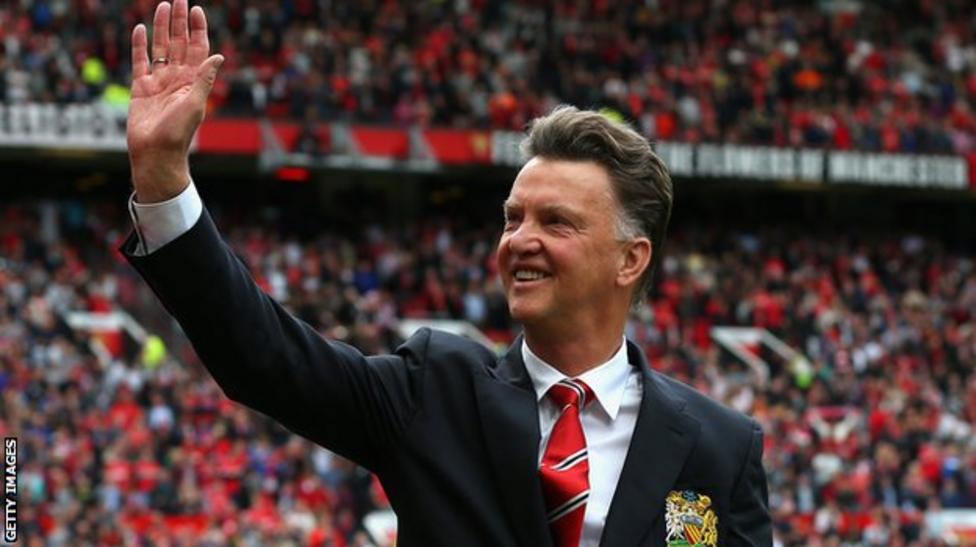
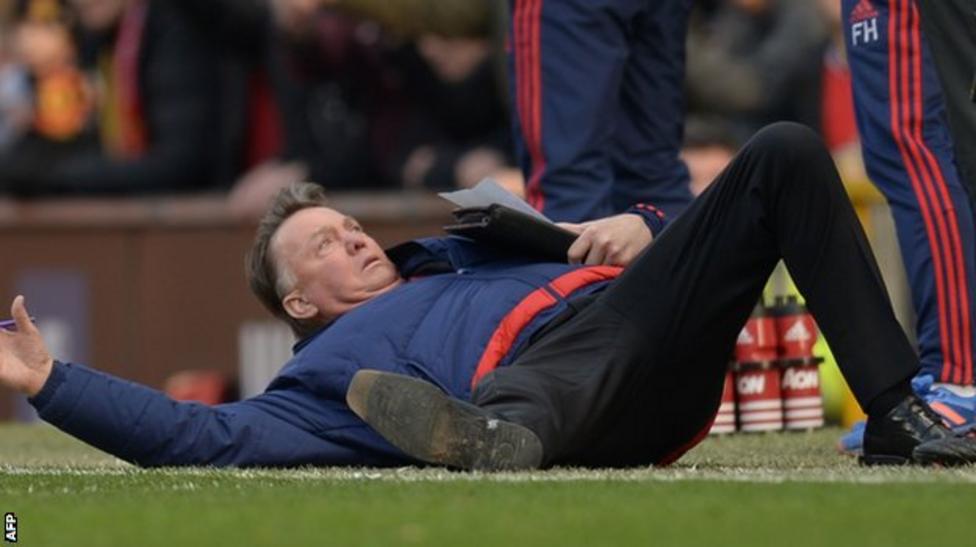
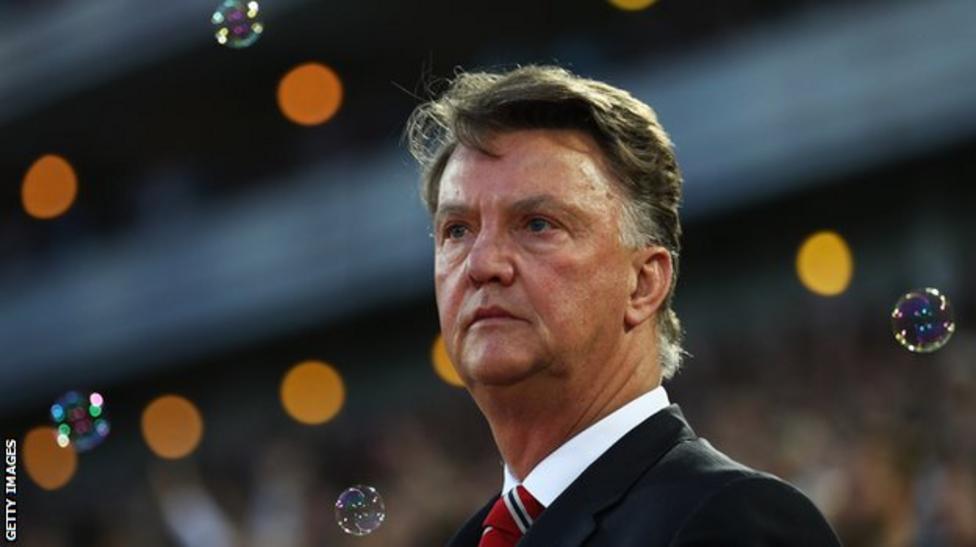
Louis van Gaal has been sacked as manager of Manchester United, with former Chelsea boss Jose Mourinho set to be named as his replacement.
The Dutchman leaves after two years of a three-year contract and is currently discussing severance terms.
BBC Sport reported on Saturday that United’s FA Cup win over Crystal Palace would be his last game in charge.
Mourinho’s appointment is expected to be confirmed he meets with senior United officials on Tuesday.
BBC sports editor Dan Roan predicted Van Gaal’s sacking would be confirmed on Monday
Van Gaal, 64, took control of United after leading the Netherlands to the semi-finals of the 2014 World Cup finals in Brazil.
The Old Trafford club finished fourth in the Premier League in his first season in charge to qualify for the Champions League.
But they finished fifth this term and will play in the Europa League next season.
They only scored 49 league goals, too, their lowest total since 1989-90.
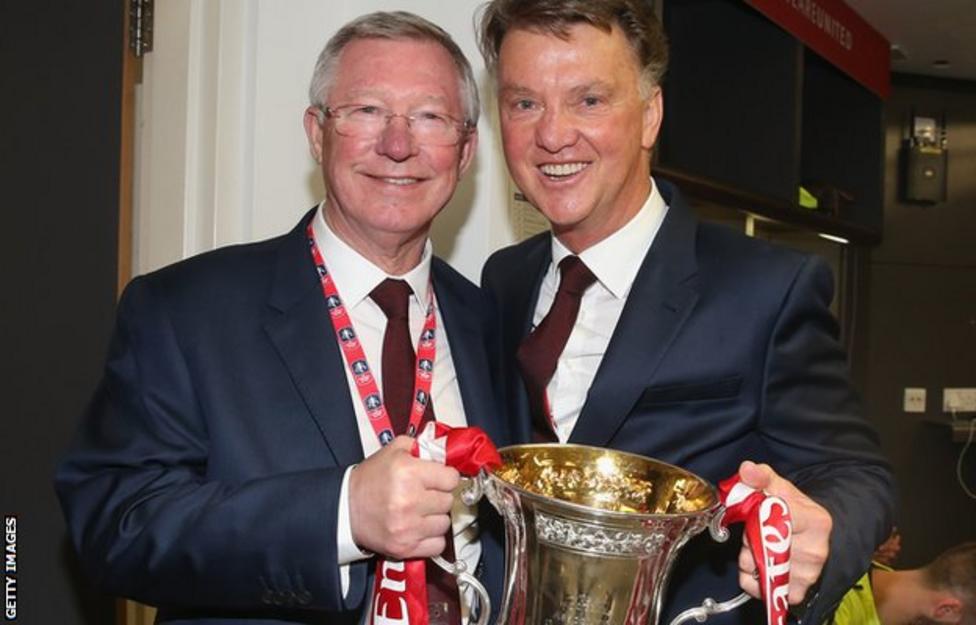
Saturday’s FA Cup success at Wembley gave United a first trophy since Sir Alex Ferguson delivered the Premier League title in 2013 in his last season before retirement.
But it was not enough to stop Van Gaal from losing his job.
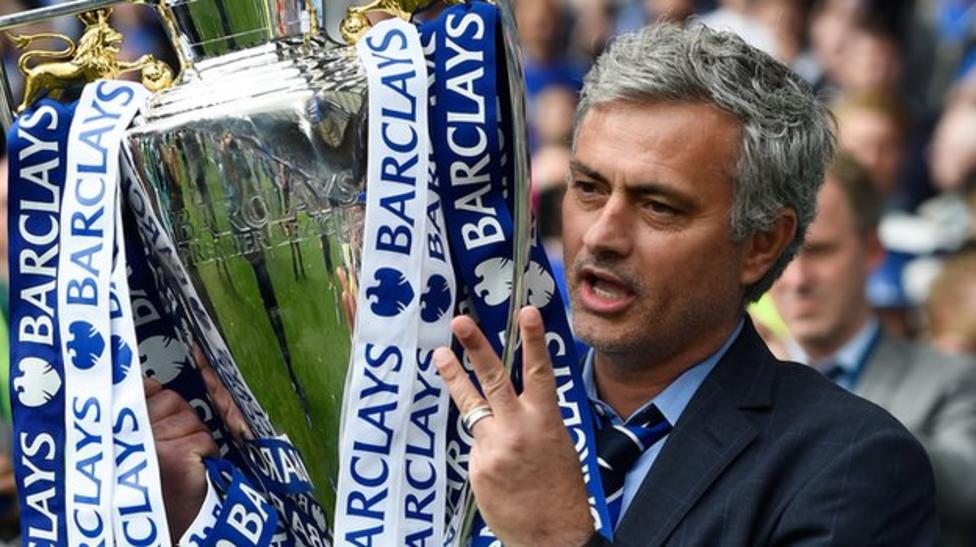
Mourinho, 53, was sacked by Chelsea last December, just seven months after leading the London club to the Premier League title.
Jose Mourinho won the Premier League with Chelsea in 2005, 2006 and 2015
Analysis
BBC Sports editor Dan Roan:
“In April 2014, United’s mishandling of the sacking of Moyes was heavily criticised, the coach humiliated when learning of his demise through the media.
“The club’s hierachy accepted it was wrong that news had leaked out before the manager had been informed. But two years on, it has happened again.
“Van Gaal was apparently informed of his impending departure by his wife when – still at Wembley following the club’s FA Cup Final win – she read the news on the BBC website on Saturday evening.
“United hold the Dutchman in high regard and had desperately tried to maintain secrecy during their negotiations with Mourinho, hoping Van Gaal would lead his team to a top-four spot in the Premier League.
“Even after that target was missed, the club wanted him to be able to enjoy his FA Cup win, never once briefing against their coach or adding to the speculation. But it was always naive to think that news of their plans would remain secret.
“Once the news broke on Saturday, it was hard to fathom why they waited to put Van Gaal out of his misery. Once again serious questions will be asked about the way the Glazer regime runs the club – and the way it communicates.”
How do the stats shape up?
Manchester United scored 49 Premier League goals this season – one more than Blackburn scored when they were relegated in 2012
For the second consecutive season, United ended up with a negative goal difference away from home
Went 11 home games without scoring a first-half goal earlier this season
They conceded the joint fewest goals in the league – 35 – along with Tottenham
The team made 3,222 backwards passes – the most in the league
Van Gaal used 33 players over the season – the second highest number after Liverpool (34)
Man Utd topped the clean sheet record table alongside Arsenal with 18
What is his legacy?
Van Gaal arrived at Old Trafford with his reputation enhanced after steering the Netherlands to the 2014 World Cup semi-finals.
The experience he gained while managing Ajax, Barcelona and Bayern Munich also suggested he had the necessary clout and ego to succeed at United, in contrast to predecessor Moyes, who had been in charge at Preston and Everton before taking over at the end of the 2013 season when Sir Alex Ferguson retired.
After a solid first season, Van Gaal was expected to turn United into title contenders, especially after taking the club’s outlay on players to more than £250m since the summer of 2014.
His record in the transfer market has been hit and miss.
Angel di Maria – a British record signing at £59.7m – faded after a fast start and was sold, while Radamel Falcao delivered little after his loan move from Monaco.
The summer of 2015 has hardly proved a success either, with Bastian Schweinsteiger and Morgan Schneiderlin, who reportedly cost United a combined total of around £40m, failing to add dynamism to midfield.
This campaign has also been undermined by injuries, with Luke Shaw, Antonio Valencia, Marcus Rojo, Schweinsteiger, Wayne Rooney, Michael Carrick, Phil Jones and Ashley Young all missing significant parts of the season.
What did his critics say?
A number of significant former United players have taken issue with the style of play under Van Gaal, claiming his tactics are negative and players are afraid to express themselves.
“Manchester United are going backwards again and I don’t see that changing because the manager will not change [his tactics],” said Rio Ferdinand, the England defender signed for a then British record £30m in 2002.
Steve Coppell, who starred for United in the 1970s and 80s, said it was hard to understand Van Gaal’s philosophy, claiming “players sometimes do not really understand what he’s trying to get through to them”.
Former midfielder Paul Scholes – a member of the club’s legendary ‘Class of ’92’ – was one of the Dutchman’s harshest critics.
“It seems he doesn’t want players to beat men and score goals,” he said. “It’s not a team I would have enjoyed playing in.
“There’s no spirit, there’s nobody having a go at each other, there’s no smiling, there’s no entertainment.”
Van Gaal had previously won league titles with Ajax, Barcelona, AZ Alkmaar and Bayern Munich
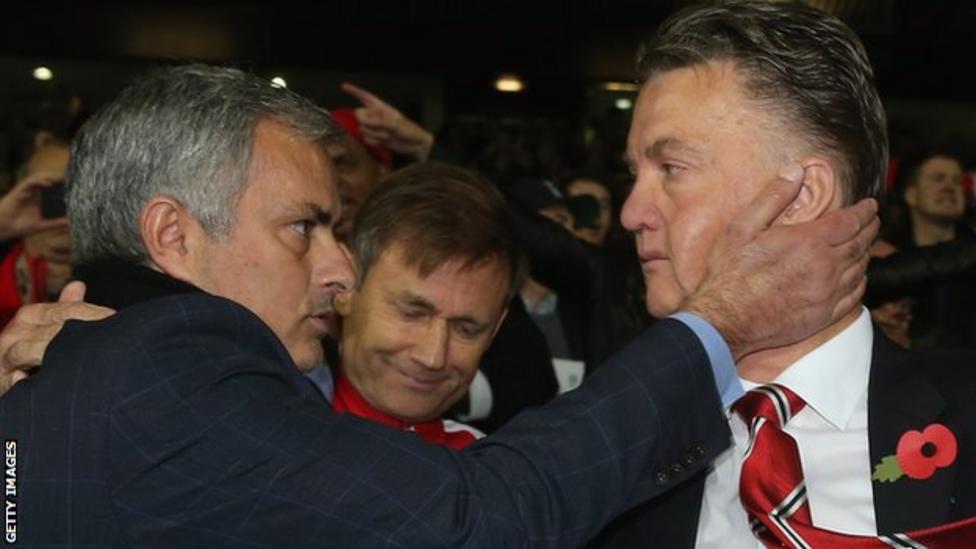
Jose Mourinho and Louis van Gaal were briefly together at Barcelona in 1998/99
Van Gaal was in charge of United for 103 games, winning 54, drawing 25 and losing 24
Manchester United’s FA Cup final win over Crystal Palace gave them a 12th success in the competition and a first since Sir Alex Ferguson led them to victory in 2004
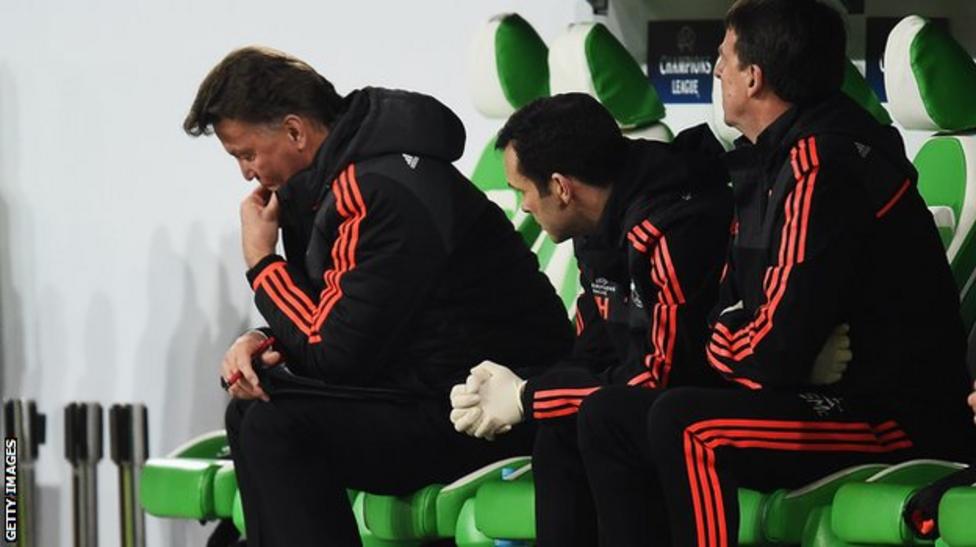
Manchester United went out of the 2015/16 Champions League when they lost at Wolfsburg last December
Losing 3-2 at West Ham in United’s penultimate Premier League game all but ended their Champions League qualification hopes
Dr. Mahamudu Bawumia, NPP Vice-Presidential Candidate to Nana Akufo-Addo, has said that the mismanagement and incompetence of the current NDC government, which has led to the current economic slump and unprecedented hardships, is scaring away Ghanaians of all walks of life and foreign investors.
Dr. Bawumia said this when he interacted with students of the Navrongo Nurses Training College in Navrongo on Wednesday.
“The Economy the NDC under John Mahama have created is a real scary economy. It is scary if you are a student and worried about getting a job. It is scary for businessmen in this very high tax economy. It is very scary for people who are borrowing and who are incurring very high interest rates on their loans. It is very scary for our nurses, it is very scary for our doctors, it is very scary for our teacher trainees and our teachers. It is in fact what one can describe as a Kaakaamotobi economy. They have scared the living daylight out of all of us”, Dr.Bawumia stated.
Dr. Bawumia therefore laughed off a claim by one NDC government official that his critique of the management of the Economy was scaring away investors and pointed out that it is rather the incompetence, cluelessness and untruthfulness of the NDC government coupled with unfavourable conditions like high electricity bills and over four years of unstable electricity supply (Dumsor) that is scaring away foreign investors and the donor community.
“I found it very funny when one of the Ministers of Finance said that Dr. Bawumia is scaring away foreign investors. They have scared away domestic investors, teachers, nurses, businessmen, farmers and fishermen etc. It doesn’t take me to scare away foreign investors. It is your mismanagement that is scaring away foreign investors.”
“It is your mismanagement of this economy that resulted in Ghana seeking an IMF bailout. Ghana went for an IMF bailout because it became largely broke and because it had lost policy credibility. That would scare away any foreign investor, if you admit you don’t have credibility and have to borrow credibility from the IMF”, he said.
Dr. Bawumia noted that if the government had listened to the wise counsel from experts and the opposition when it started raising issues about the recklessness and mismanagement of the economy, Ghana would not have been in the economic ditch it finds itself in currently.
The interaction with the students of the Navrongo Nurses Training College formed part of the NPP Running Mate’s tour of the Upper East region, which has seen him tour the Builsa North and Builsa South constituencies, Binduri, Zebilla, Pusiga and Tempane with a call on people of the region to massively join the ‘Change Train’ and elect Nana Akufo-Addo as President to salvage Ghanaians from the hardships and crisis the country currently finds itself in on several fronts.
The Ghana National Association of Teachers (GNAT) has said it is unhappy that the Ghana Education Service (GES) tasks external examiners to set the End of Term Examination questions for pupils in basic schools.
It said teachers, head teachers and circuit supervisors must rather be equipped with the necessary skills and expertise to adequately assess the pupils at all levels because it was the surest way to give the pupils quality education and demystify examination in the country.
Mr. Mathew Adjarjah, the head of Professional Development Unit of GNAT, stated GNAT’s position at an Assessment Training Workshop at Cape Coast for 120 Subject Teachers, drawn from five regions across the country, at the weekend.
The Association said the practice was an affront to the teaching profession, and it had the tendency of compromising professionalism, therefore, it must be discouraged at all levels.
“Teachers don’t set questions anymore, we are told that some people bring their own schemes and sometimes those schemes are in conflict with the GES approved ones,” GNAT complained.
“They have topics that are not in the syllabus and because of that some of the questions are irrelevant to the pupils”.
The workshop, organised by GNAT, was aimed at upgrading the skills and knowledge of teachers on Assessment, Processes and Procedures in Writing Good Test items and the Use of the Assessment Results to improve teaching and learning in schools.
The beneficiary Regions are Volta, Eastern, Greater Accra, Central and Western.
Mr. Adjarjah said teachers played very critical roles in the assessment of pupils and the GES syllabus served as guide for them to prepare their planed lessons for the term and set questions at the end.
Therefore, that responsibility must not be taken away from them.
He said it was wrong for external examiners to set questions because they did not consider the peculiar environments of the schools.
“Teaching is a profession, therefore, the teachers who are in the classroom must have a say on how the pupils are assessed,” he said.
“In any case when the required results are not attained, the whole society point fingers at the teacher but in taking the assessment decisions, the teachers are never consulted,” he complained.
Mr. Albert Adusei, the Second National Trustee of GNAT urged the participants to make use of the new skills acquired to help improve students’ performance and the quality of education in their respective Regions.
The participants were taken through topics such as “Test Format; their uses and test planning, Preparation of Test Blueprint, Tables of Test Specification, Test Data Analysis and Uses and Utilisation of Test Results”.
Some of the participants who spoke to the Ghana News Agency said the practice showed that the GES did not have confidence in its teachers, but they were competent enough to set the examination questions.
They said some teachers were becoming lazy as a result and appealed to the GES to consider ending it in the interest of the pupils and education in the country.
The Ghana Meteorological Agency (GMA) is asking Ghanaians to prepare for more rains and possible flooding across the country as this year’s raining season sets in.
Hours of rains Saturday and Sunday left parts of the country, particularly Accra flooded, and the GMA is warning of more of such rains with a thunderstorm in northern Ghana on Monday morning.
The storm was observed over north-eastern Benin and is said to be moving westward, the GMA said, adding the thunderstorm “is forecasted to sweep through most places in the northern sector”.
“The public should prepare for the perennial issues of flooding in parts of the country,” a meteorologist with the GMA, Patrick Lamptey told Onua FM’s Monday morning.
Mr. Lamptey advised the public to “respect the warnings from GMA” and prepare accordingly to avoid being caught off guard by the rains and the associated perennial flooding.
He identified chocked gutters as the main cause of the consistent flooding in the country, and advised people begin tidying up their surroundings, by particularly desilting the drainage systems around them to prevent choking whenever it rains.
NACOB Executive Director Akasi Sarpong: In this country, we have seen a politician of a ruling party arrested for drugs before
Executive Director of the Narcotics Control Board (NACOB) Yaw Akrasi Sarpong has staged a scathing attack on politicians as those behind the abuse of marijuana and alcohol in the country.
Mr Sarpong contends that some may not use the hard drugs but make them available to others for their own ulterior motives.
Speaking on TV3’s Hot Issues over the weekend, the NACOB Executive Director cited the mobilization of spontaneous demonstrators by politicians as influenced by the provision of illicit drugs.
“Many people who are mobilized for large scale demonstrations on the spur of the moment,” he said, “particularly to play politics [are all under the influence of] alcohol and marijuana.”
‘Atemuda, Jordan or Under’
Mr Sarpong said the situation is becoming dangerous as most politicians are taking advantage of this.
“If any politician will use alcohol and marijuana or not necessarily use them or know people who will normally, for being daring, go and smoke marijuana and drink akpeteshie on top or go and take Atemudaor Jordan or Under, that is a very dangerous situation.”
The NACOB boss has consistently called for the decriminalization of the use of drugs as he argues there are numerous medical benefits.
He blamed politicians especially members of Parliament (MPs) for not leading the debate on the legalization of marijuana, popularly referred to as wee.
“In this country, we have seen a politician of a ruling party arrested for drugs before,” he cited as one of the hypocritical stance of politicians, stressing that his colleagues justified his wealth by saying the politician in question provided bicycles for his constituents.
“All that it means is that people know people involved in drugs whose monies in one way or the other helps in somebody’s campaign. And that is very dangerous.”
The Ghana Meteorological Agency is warning of a thunderstorm in northern Ghana on Monday morning, precisely between 6:00am and 9:00am.
The storm was observed over north-eastern Benin and is said to be moving westward.
A release on Monday, May 23 says the thunderstorm “is forecasted to sweep through most places in the northern sector”, viz Upper East, Upper West and Northern regions.
Parts of Brong Ahafo and Volta regions are also expected to be affected by the thunderstorm, which is predicted to last 6 hours.
“It will be accompanied by gusty winds,” the release stressed.
Meanwhile, rains in Accra on Sunday have flooded some areas.
Some suburbs of Kasoa have been reported submerged in rainwater.
Pictures sent via WhatsApp
The Obetsebi-Lamptey Roundabout in Accra has not been spared the looming disaster.
Picture sent via Twitter by Benjamin Addotey (@benaddotey)
The rains are yet to recede in some areas as they have been experiencing showers sinceMonday dawn.
The National Democratic Congress (NDC) parliamentary candidate for Weija-Gbawe Obuobia Darko-Opoku has hit the ground running with her campaign, following a series of programmes aimed at rallying the people to believe in the transforming lives agenda.
Obuobia has been paying surprise visits to various communities in the Weija-Gbawe constituency, which is currently in the grips of the opposition New Patriotic Party (NPP).
OB interacting with the aged during her house-to-house campaign
Her rigours and intensive campaign strategy which has caught on well with the locals has seen her bonding with the constituents as she listens to their needs.
The babies were not left out during her campaign
“The campaign has been positive,” Obuobia said during her house-to-house campaign. “It has helped me connect quite well with them. It has been exciting and challenging at the same time, but it is worth it.”
OB, as she is affectionately called, playing cards with some of her fans
The former broadcaster spends a lot of time with the electorate at their homes and work places irrespective of their political affiliation to understand their way of life and how best she can help transform their lives if she wins the parliamentary seat.
Paying attention as the people outline their problems
“I’m not only asking for their votes, but I’m helping if I can. The young and old can attest to that. I’ve made it a conscious effort to be in the shoes of my people ever since. By so doing I’m able to understand their problems. It’s not just about votes. I have fun with them as well. We have had time to play cards, football and even undergo gym drills so it is catching on well,” an excited and ever-smiling Obuobia opined.
Obuobia in a hearty chat with some electorate
On Saturday, she joined the youth of Mallam to de-silt choked gutters as part of her campaign effort to also ensure a healthy life in the Weija-Gbawe constituency. She also spent time to work out at a local gym with the youth.
Showing appreciation to the youth after a gym workout
Helping in a clean-up exercise at Mallam Junction
“I’m happy the people understand that politics is not about insults, but how best you can help them live a meaningful life. I love being with them. And usually it is full of fun because you can’t tell the difference between who is the candidate and the voter. That’s how it must be, isn’t it? I’m staying focused and will not allow insults and divisive tactics from my opponent derail my campaign. I have my eyes on the ball and November 7 will tell,” Obuobia stated.
Obuobia has been instrumental in the constituency ahead of the November 7 polls as she pays the medical bills, school fees of most people including the provision of water reservoir at the Ga South Municipal Hospital and other areas, building of bridges on water ways as well as public places of convenience among several other projects.
The World Bank has lauded Professor Eric Danquah, the Director of the West Africa Centre for Crop Improvement (WACCI), University of Ghana, for the excellent successful organisation of the Africa Centres of Excellence (ACE) meeting in Accra.
Mr Andreas Blom, a World Bank Senior Education Economist and the leader of the ACE Task Team, said Prof Danquah, who chaired the Organisation’s Committee for the Eighth Project Steering Committee (PSC) meeting and the fifth workshop of the ACE in Accra, did a very perfect job.
He described the event as, “The best ever to be organised in the history of the ACE project steering committee meetings.”
Mr Blom gave the commendation in his closing remarks at the end of the three-day ACE Project Committee Meeting, in Accra.
It was attended by 200 participants from all the 22 ACEs from West and Central Africa.
Mr Blom urged the Vice Chancellors of the participating universities to comply with the Bank’s directives on the project funds disbursements, saying the unnecessary delays in the disbursement of the project funds hindered progress.
He cautioned staff of the various ACE project centres to guide against corruption, and to pursue team work all the time to ensure success of the project.
The ACE Project, is being financed by the World Bank, through the facilitation of the Association of African Universities (AAU).
The objective is to promote regional specialisation among participating universities in areas that address specific and common regional development challenges, such as Science, Technology, Engineering, Mathematics, Health and Agricultural.
The Bank is making available 150 million dollars for the project, with each selected centre entitled to a maximum of eight million dollars.
Mr Blom hailed the large number of vice chancellors who participated, stating that this would go a long way to deepen the ownership of the ACE project.
He announced that the next project meeting was scheduled for November 15, in Ouagadougou, Burkina Faso.
Ms Eunice Yaa Brimsah Ackwerh, a Senior Education Specialist at the Accra Office of the World Bank Office, urged the centres to adhere to good practices such as making information available, admitting students from other countries and good auditing reports.
Dr Ouikepe Folarin, the Deputy Centre Leader, African Centre of Excellence for Genomics of Infectious Disease (ACEGID), Redeemer’s University, Nigeria, also praised Prof Danquah for an excellent organisation of the Accra meeting.
She appealed to the World Bank to ensure that Nigeria ACEs project did not collapse; explaining that while other countries had so far disbursed 20 per cent of their project fund, Nigeria was still at 10 per cent.
Prof Ndowa Lale, the Vice Chancellor, University of Port Harcourt, Nigeria, said the success of the ACE project would accelerate the growth and development of the African continent.
He explained that this would also depend on good governance practices, the timely release of project funds and the provision of adequate infrastructure to house the Centres, which would facilitate the building of the required capacity in Science, Technology, Mathematics and Engineering.
The distribution of the beneficiary centres are Ghana – three, Ivory Coast – three, Senegal- two, Nigeria -10, with Benin, Burkina Faso, Cameroun and Togo having one each.
The Gambia is buying services from the 22 ACEs.
The ACE Project seeks to address regional development challenges, as well as facilitating the delivery of high quality training and applied research to meet the skills demand of the regional labour market.
The ACE Centres in Ghana are WACCI and the West Africa Centre for Cell Biology of Infectious Pathogens all at the University of Ghana and the Regional Water and Environmental Sanitation Centre at the Kwame Nkrumah University of Science and Technology.
The Bureau of National Investigation – BNI has broken its long silence on recent accusations over human right abuses and abuse of its power as a security agency.
The state security outfit denied claims it ransacked the offices of the Danquah Institute and the residence of Captain (rtd) Edmond Koda, following the arrest of some three South African ex-police officers who were in Ghana to train Nana Addo’s personal security.
The BNI has also denied ever being involved in the arrest of the Managing Director of a quarry company who allegedly took photos of some Mahindra vehicles allegedly meant for the National Commission for Civic Education (NCCE) but branded in the colours of the National Democratic Congress –NDC.
The Director of the Bureau, Marcus Pius Awelinga, made the denials during an interaction with the ECOWAS community development program media network in Accra.
In early April, the BNI reportedly picked up the Managing Director of the quarry company, Marbles and Granites for taken pictures and alleging that some Mahindra vehicles meant for the NCCE had been diverted to the ruling party and branded in the party’s colours.
He was subsequently released after spending about two days with the BNI. The BNI boss indicated that it was the police who arrested the man in question and brought him to the BNI.
On the NPP’s Captain (rtd) Edmund Kodah, the BNI Director said the search in his premises was conducted with his consent, and that every step of the investigation process was endorsed by him.
According to him, BNI officers went to the offices of the Danquah Institute but met the security man on duty but upon seeing them he locked himself up compelling the BNI officers to abandon their mission.
He wondered how the media came by pictures of the supposed break in at the institute’s offices.
The involvement and supposed search in the offices of both the Danquah Institute and Captain Koda’s residence were in connection with the three South African’s who were in Ghana to train the NPP flagbearer’s personal bodyguards.
Both allegations and other alleged human right abuses have been denied by the Bureau including an alleged maltreatment of Daniel Asiedu, the man reported to have murdered the Member of Parliament for Abuakwa North constituency.
The BNI, per the act that established it is mandated to investigate all activities of national interest in order to safeguard the country’s integrity and security.
The BNI as an intelligence body is to detect and prevent crimes and advice government on emerging threats.
However, the investigative agency has come under public criticism in recent times, with accusations that it is nosing on political opponents.
But the director of the bureau, Marcus Pius Awelinga, denied any wrongdoing.
He said the BNI has not investigated the MP’s murder suspect Daniel Asiedu but only provided safe custody at the instance of the police.
He insisted, the man was arrested by the SWAT team of the police and brought for custodial purpose only.
Awelinga also denied human right abuses in BNI cells, adding they have one of the best custodian facilities, which is why most security agencies preferred them.
The BNI director urged Ghanaians to ignore the falsehood against the institution.
He also urged the media to help safeguard the peace and stability of the country by getting the public to think and act more responsibly.
Ecobank Transnational Incorporated (ETI), parent company of the Ecobank Group, and Old Mutual Emerging Markets (OMEM), a part of the Old Mutual Group, on Friday announced an enhanced strategic agreement that will strengthen existing ties between the leading pan-African bank and the insurance and asset management giant.
Old Mutual Emerging Markets currently has a bancassurance partnership with the Ecobank Group.
This latest agreement will grow the existing strategic alliance by offering seamless insurance services to Ecobank clients across selected countries where the two groups have operations.
Clients will benefit mutually though access to a range of financial services that include life insurance, savings and short-term insurance solutions across a greater network on the African continent.
Ecobank Group CEO Ade Ayeyemi said plans for the integrated model include providing access to Old Mutual solutions for Ecobank’s banking operations across selected countries.
“This is a productive and valued partnership between two pan-African institutions to provide complete financial services solutions to our customers,” he said.
Ralph Mupita, CEO of Old Mutual Emerging Markets, said: “It is in our mutual interest to ensure that this alliance grows from strength to strength, as we now look to complement Ecobank’s range of banking services to its customers with Old Mutual’s trusted financial products across the Ecobank network on the continent.”
Signed by both company chief executives at the Ecobank Group’s Lome head office yesterday, the enhanced agreement goes into immediate effect.


 Director of Public Prosecutions Shaun Abrahams said he did his job “without fear, favour or prejudice” Photo: AFP


 At least 78 people have been killed in a series of bomb attacks in two government strongholds on Syria’s Mediterranean coast, state media say.
 A media outlet linked to IS said the jihadist group had claimed responsibility for the attacks AFP

 Louis van Gaal has been sacked as manager of Manchester United, with former Chelsea boss Jose Mourinho set to be named as his replacement.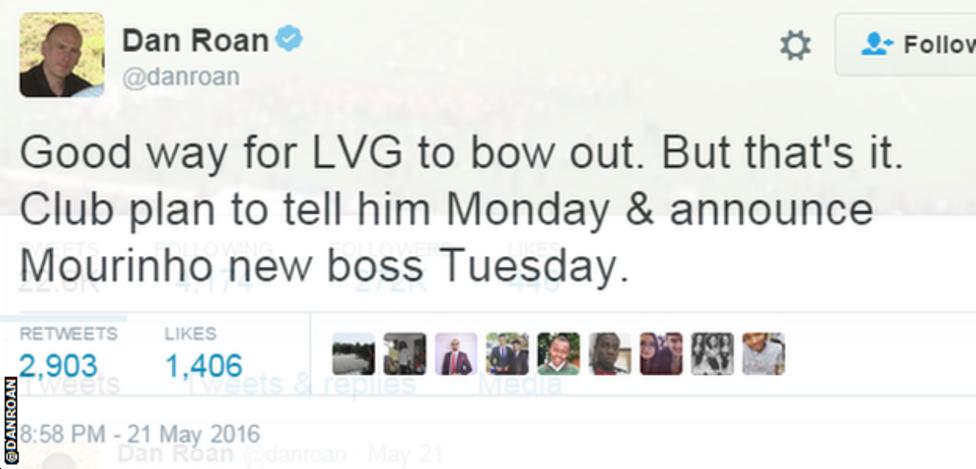


 The Ghana National Association of Teachers (GNAT) has said it is unhappy that the Ghana Education Service (GES) tasks external examiners to set the End of Term Examination questions for pupils in basic schools.
 The Ghana Meteorological Agency (GMA) is asking Ghanaians to prepare for more rains and possible flooding across the country as this year’s raining season sets in.
 The Ghana Meteorological Agency is warning of a thunderstorm in northern Ghana on Monday morning, precisely between 6:00am and 9:00am.


 The National Democratic Congress (NDC) parliamentary candidate for Weija-Gbawe Obuobia Darko-Opoku has hit the ground running with her campaign, following a series of programmes aimed at rallying the people to believe in the transforming lives agenda.


 The World Bank has lauded Professor Eric Danquah, the Director of the West Africa Centre for Crop Improvement (WACCI), University of Ghana, for the excellent successful organisation of the Africa Centres of Excellence (ACE) meeting in Accra.
 The Bureau of National Investigation – BNI has broken its long silence on recent accusations over human right abuses and abuse of its power as a security agency.
 Ecobank Transnational Incorporated (ETI), parent company of the Ecobank Group, and Old Mutual Emerging Markets (OMEM), a part of the Old Mutual Group, on Friday announced an enhanced strategic agreement that will strengthen existing ties between the leading pan-African bank and the insurance and asset management giant.